ServicesStamped Concrete
Stamped Concrete in Mission Viejo
Stamped concrete gives you the look of slate, flagstone or brick in one continuous slab. We help you pick the pattern, color and sealer early, then pour, stamp and seal on a schedule you set, so the finished surface matches what you budgeted for.
What stamped concrete is and when it makes sense
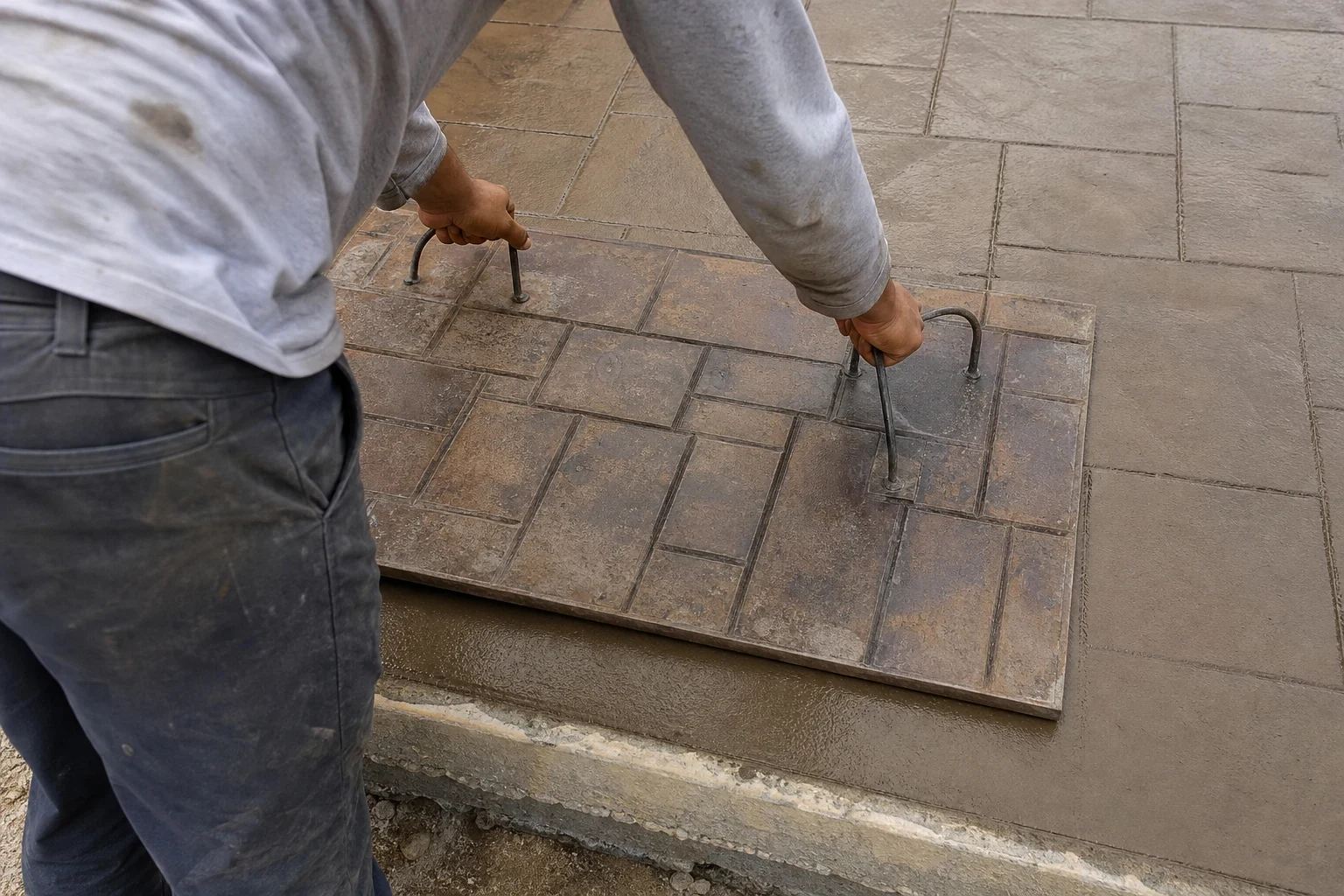
Stamped concrete is a standard reinforced slab that gets color and texture while it is still plastic. We broadcast a color hardener or mix integral color into the load, apply a release agent, then press polyurethane stamp mats into the surface before it sets. The release works as a barrier between mat and concrete, and the powder that settles into the recesses tints them a shade darker, which is what makes a pattern read as stone instead of painted concrete.
It is the right call when you want a decorative surface but would rather not deal with the shifting joints and weeds of loose pavers. It suits patios, courtyards, pool surrounds, walkways and driveway borders. The timing is tight on pour day, so the decisions that matter most happen weeks earlier. That is why we spend real time on planning with you before anything is formed.
Our crews have been stamping and pouring for more than 15 years, and the company holds a license from the California State License Board (CSLB). Each stamped slab we finish is covered by our 1-year warranty.
What a stamped concrete job includes
Excavation and compacted base
We remove the old surface or soil to depth, then place and compact a granular base. Much of south Orange County sits on clay that swells when wet and shrinks when dry, and a well-compacted base keeps that movement from showing up in the slab.
Forms, reinforcement and slope
We set forms to a measured fall so water drains away from your home. Rebar or wire is raised on supports to mid-depth in the pour, since steel lying on the ground does almost nothing to hold cracks closed.
Color system
Dry-shake color hardener gives a dense, vivid surface with better wear resistance. Integral color tints the full depth and is more forgiving if the surface ever gets scratched. We explain the trade-off and show samples of both.
Stamping and texture
Pattern mats, flex mats for edges and texture skins for areas the mats cannot reach, all applied in a set sequence so the pattern lines up across the whole slab.
Control joints and sealing
We saw-cut control joints into grout lines where possible so they disappear into the pattern. Once the slab has cured, the leftover release powder is rinsed away and a sealer goes on to deepen the color and keep stains from soaking in.
Signs stamped concrete is the right fit for your project
Your plain slab is near the end of its life
If you are already budgeting to replace a worn gray patio or walkway, adding pattern and color now costs far less than doing it as a separate project later.
Pavers keep heaving or growing weeds
Individual pavers can settle and lift with the soil. A single reinforced slab with a stone pattern avoids loose units and sand joints.
You are planning a larger backyard project
Pool decks, outdoor kitchens and courtyards look more finished when the hardscape ties together. Stamping lets one pattern carry across several areas.
You want a stone look on a set budget
Natural flagstone and slate are labor-intensive to set. Stamped concrete gets close to the look with a more predictable cost.
How we plan and pour a stamped slab
- 1
Site visit and measurements
We measure the area, check drainage and soil, and talk through how you use the space. You get your quote by phone after that visit, with the pattern, color system and sealer spelled out.
- 2
Pattern and color decisions
You pick from samples ahead of time. We lock in the choices before ordering material, because a stamp pattern cannot be changed once the concrete starts to set.
- 3
Prep day
Demolition, grading, base compaction, forms and reinforcement. We protect lawns, planters and walls next to the work area.
- 4
Pour and stamp day
The crew places and screeds the concrete, applies color and release, then stamps in sequence while the surface is still workable. Hot afternoons shorten that window, so we usually start early.
- 5
Cure, wash and seal
After the slab cures, we pressure-wash the excess release, saw-cut any remaining joints and apply sealer. Walking on it is usually fine by the following day, while a stamped driveway needs about a week before a car goes on it.
What moves the price of stamped concrete
A stamped slab runs higher than a plain broom-finished one, since it takes color hardener, release, stamp mats and a larger crew working fast while the concrete is still plastic. Most of the variation between projects comes down to square footage, pattern choice and how much has to be torn out first. When you know these drivers early, you can trim or expand scope before the quote is settled.
- Area and layout
- Big, simple rectangles stamp efficiently. Curves, steps and tight corners need flex mats and more hand texturing.
- Pattern complexity and color
- The most economical approach pairs a single base color with a single antiquing release. A second release shade, hand-stained stones or a contrasting border all add labor on the slab.
- Demolition and base work
- Breaking out an existing slab and hauling the debris, or correcting a soft or poorly drained base, adds prep time before any concrete arrives.
- Access
- When a truck cannot reach the forms, concrete has to be pumped or wheeled in, which changes the crew size and equipment on site.
- Sealer and slip resistance
- Solvent-based and water-based sealers differ in cost and finish. Pool decks and sloped walkways usually get a grit additive mixed into the sealer for traction.
Stamped concrete questions
Something not covered here? (949) 267-3649
Is stamped concrete slippery?
A glossy sealer can be slick when wet. We mix a fine grit additive into the sealer on pool decks, steps and sloped areas, and we can suggest textures with deeper relief for better footing.
Will stamped concrete crack?
Any concrete can develop hairline cracks as it shrinks during curing and as the soil underneath moves. We place control joints so cracking happens where we choose, and we line those joints up with the grout lines of the pattern so they are hard to spot.
How often does it need resealing?
Plan on a new sealer coat roughly every two to three years, and sooner on surfaces that get full sun or heavy foot traffic. A good signal is when rain soaks into the surface instead of beading up, or the color has gone flat and chalky. Budgeting for that reseal ahead of time keeps the color from fading past the point a sealer can bring back.
Can you stamp over my existing patio?
Stamping only works in fresh concrete, so an existing slab has to come out and be replaced with a new pour. We look at the old slab and the base below it on the site visit and explain what removal involves.
What does your warranty cover?
Your stamped slab comes with our 1-year warranty. When we go over your quote by phone, we explain exactly what that coverage includes, so nothing is left unclear before you choose a pour date.
Put stamped concrete on your calendar early
Patterns and colors take time to choose, and good pour dates fill up. A phone conversation now gets your project measured, scoped and scheduled on your timeline.