ServicesRV Parking Pads
Concrete RV Parking Pads in Mission Viejo
An RV puts several tons on a few small tire patches, and a standard 4-inch slab is not built for that. We pour thicker, reinforced pads on a compacted base, sloped to drain, so your rig sits level and the concrete holds up for years.
A pad designed around the vehicle it carries
A Class A motorhome can weigh 15 to 30 tons fully loaded, and much of that load lands on the rear axle. A fifth-wheel or travel trailer is lighter overall but concentrates weight on the tongue jack and stabilizers. Concrete is strong in compression and weak in bending, so when the base underneath settles, a thin slab flexes and cracks along the wheel lines. That is why we size thickness, steel and base to the weight you plan to park.
The best time to build an RV pad is before you need it. If you are shopping for a rig, waiting on HOA approval or planning to move the trailer off the street, calling early lets you budget for the full job, including any gate widening or approach work, instead of discovering those costs the week the RV arrives. If you also want to widen your driveway or pour a side yard, we can plan those pours together.
What goes into an RV pad we build
Site layout and measuring
We measure your RV's length, width and turning path, then mark the pad with room for slide-outs and walking space. We check gate openings, overhead clearance and the approach from the street.
Excavation and compacted base
We remove topsoil and organic material, then place and compact a layer of crushed aggregate base. A firm, even base is what keeps the slab from cracking under the wheels.
Thicker slab and steel reinforcement
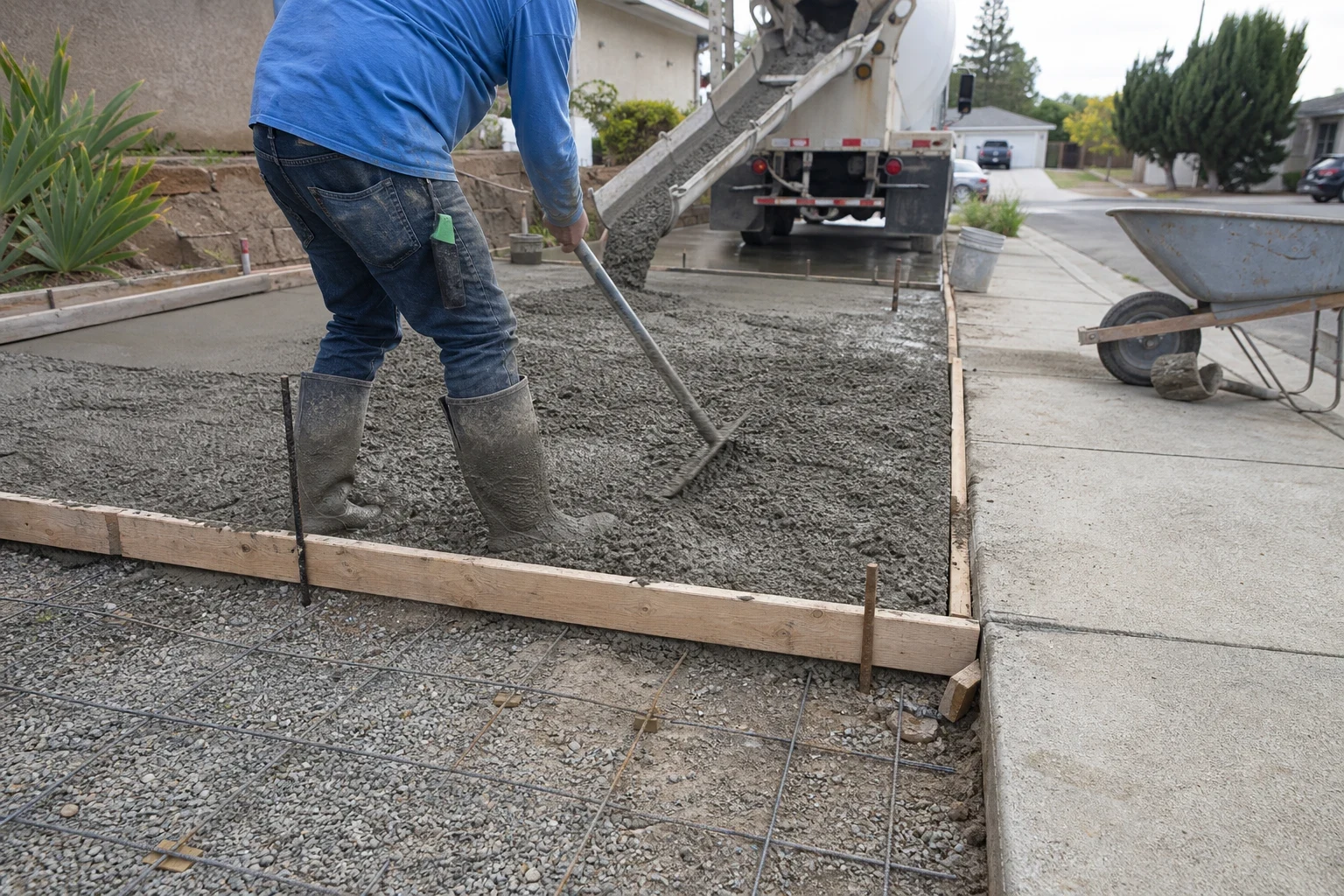
RV pads typically get 5 to 6 inches of concrete instead of the 4 inches common on walkways. The rebar is raised on supports to mid-depth, where it resists bending, rather than lying on the dirt where it adds little. We use a higher-strength mix suited to heavy loads.
Drainage slope and control joints
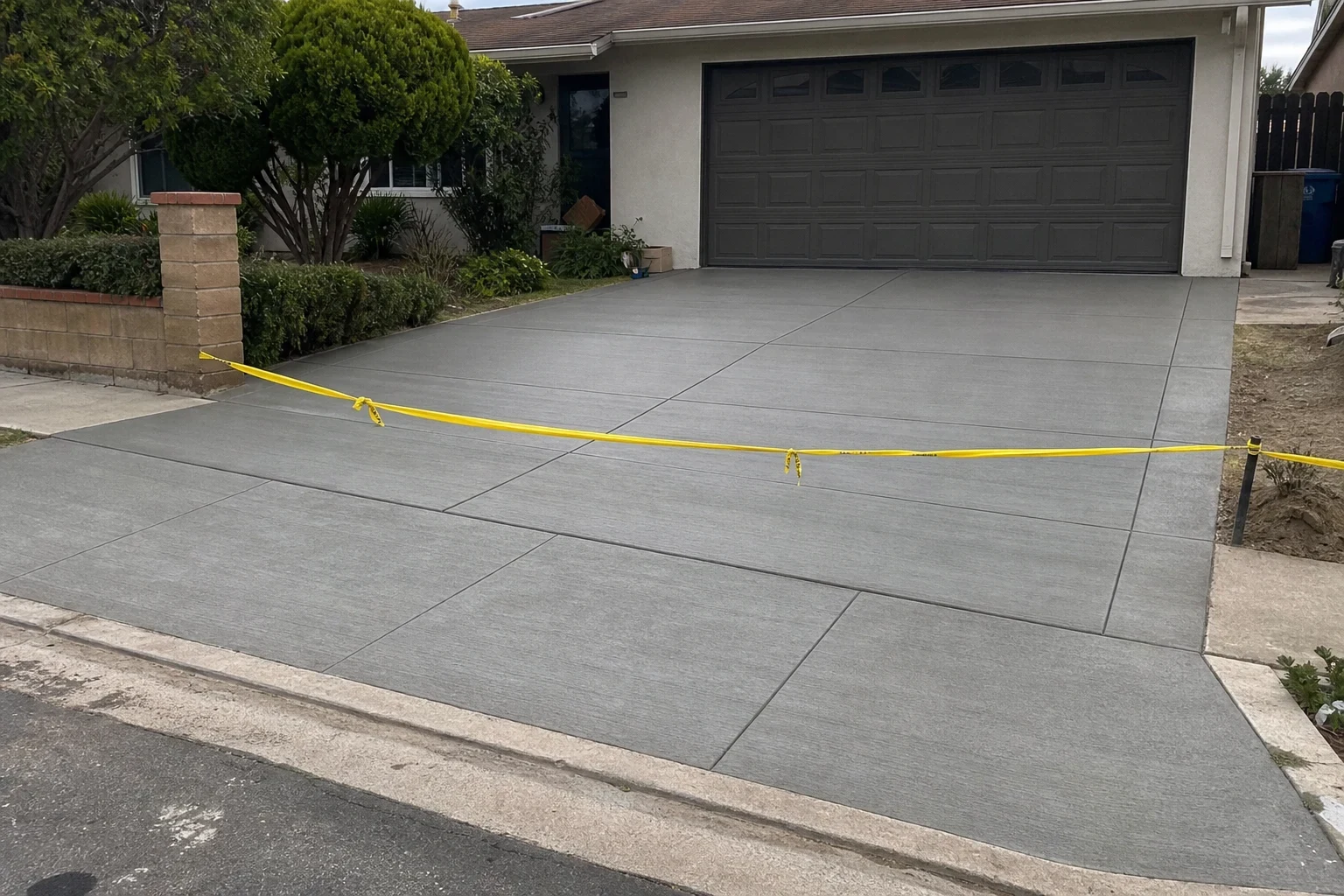
We grade the surface so water runs away from your home and off the pad, and cut control joints at planned spacing so shrinkage cracks form in straight lines instead of across the slab.
Finish and cleanup
Most owners choose a broom finish for traction when the pad is wet. We haul off excavated soil and forms and leave the area clean.
Signs it is time to plan an RV pad
Tires sinking into dirt or gravel
Gravel ruts and soft soil let the RV tilt, which strains the frame and makes leveling a chore. Rubber sitting on damp ground also ages faster.
A cracked or sagging driveway
If your rig has been parked on a 4-inch driveway, cracks along the wheel lines mean the slab is bending under weight it was not designed for.
An HOA or city parking notice
Many planned communities limit where an RV can be stored. A properly placed pad behind a gate or in a side yard often solves the problem, but approvals take time, so start before the deadline.
A new rig on the way
Buying a larger motorhome or trailer is the right moment to build. Pouring before delivery means you are not paying for storage while the concrete cures.
How the job runs, step by step
- 1
Phone call and site visit
The first conversation is by phone, where we get your RV's size and weight. Then we come out to measure, check access and look at soil and drainage. Afterward we put the price in writing, broken out by excavation, base, steel, concrete and any approach work.
- 2
Approvals and scheduling
We check whether your project needs a city permit or HOA sign-off, especially when a curb cut or driveway approach is involved, and set the pour date around those approvals.
- 3
Excavation, base and steel
Crews dig to depth, compact the base, set forms to the planned slope and place rebar. Plan on one to two working days for this stage, with a long pad or a tight side yard pushing it toward the longer end.
- 4
Pour, finish and cure
We place and finish the concrete in one pour, cut joints and let it cure. Walking on it is fine in a day or two, but we will tell you when the slab can take the full weight of the RV, which takes weeks rather than days.
What moves the price of an RV pad
An RV pad costs more per square foot than a patio because of the added thickness, steel and base. The bigger cost swings usually come from access and site prep, which is why we price every job from a site visit and break the estimate into line items you can compare.
- Size and thickness
- A 40-foot motorhome needs a much longer and thicker pad than a small trailer. More depth means more concrete and more excavation.
- Soil and base depth
- Clay-heavy ground is widespread in south Orange County, and it changes volume as it takes on water and dries out, lifting and dropping whatever sits on it. Where we find it, we dig deeper and bring in more base material to buffer the slab.
- Access for equipment
- Narrow side yards may mean pumping concrete or hand work instead of pouring straight from the truck. Widening a gate or removing a fence section also adds cost.
- Approach and permits
- Extending a curb cut or rebuilding a driveway approach involves city permits and extra concrete work. We list these separately so you can see what they add.
RV pad questions we hear often
Something not covered here? (949) 267-3649
What thickness does an RV pad need?
Our usual recommendation is 5 to 6 inches of concrete with rebar, poured over a compacted aggregate base. That covers the typical motorhome, fifth-wheel or travel trailer. A 4-inch driveway carries cars well but tends to crack under an RV's axle loads. We confirm the final depth once we know the weight of your rig.
Can you add an RV pad next to my existing driveway?
Usually, yes. Depending on the layout, we either tie the new pad to the existing slab with dowels or separate them with an isolation joint, so the two sections move independently without pulling apart. We will look at the condition of your existing driveway when we visit.
Do I need HOA or city approval?
It depends on your community and where the pad goes. Many HOAs in the area have rules on RV storage and visible parking, and any work in the public right-of-way needs a city permit. We help you sort out which applies before anything goes on the calendar.
How long before I can park the RV on it?
Concrete keeps gaining strength for about four weeks. Light foot traffic is fine within a day or two, but we will give you a specific date for the RV based on the mix and the weather during curing.
Who is doing the work, and is it covered?
Our company is licensed by the California State License Board (CSLB), and we have been in business for more than 15 years. Every RV pad we pour carries a 1-year warranty. The written estimate states what that warranty covers, and we go over it with you before you sign.
Plan your pad before the RV arrives
Give us your RV's length and weight, plus the spot on your property you have in mind. On the phone we cover size, base, access and approvals, then book a site visit so your budget rests on real numbers.