ServicesConcrete Backyards
Concrete Backyards in Mission Viejo
We pour full backyard concrete on a compacted base, sloped away from your home and jointed so cracks land where we put them. Plan it with us now and you can schedule and budget the work instead of reacting to a failed lawn or a sinking old slab.
What a Concrete Backyard Involves
A concrete backyard is more than one big slab. A typical layout joins a main area for a table and chairs with a route out to the gate, a level spot for a grill or spa, and the drains that move water off every surface. Each piece has its own thickness, finish and slope, and they all have to meet at the right elevations.
Most failures we see in older backyards trace back to the ground, not the concrete. Expansive clay soil, common across south Orange County, swells when it gets wet and shrinks in summer. A slab poured on that clay without a compacted aggregate base and proper drainage will lift, settle and crack along random lines.
That is why we start with a plan. Once the layout, grades and drain runs are drawn out, you can decide whether to pour everything at once or in phases, and you know what each phase involves before you commit.
What Our Backyard Work Includes
- Layout and grade plan
- We measure the yard, shoot elevations and mark where water goes now. The plan sets a slope of roughly 1/8 to 1/4 inch per foot away from the foundation so rain never runs toward your home.
- Demolition and haul-off
- We remove turf, old pavers or worn-out concrete and haul the debris away. Roots and soft fill come out too, because they compress later and leave voids under the slab.
- Compacted base and reinforcement
- Crushed aggregate goes down in lifts and gets compacted with a plate. Rebar is propped up on small supports so it ends up mid-depth in the slab rather than lying in the dirt, since steel only adds strength when concrete wraps it on every side.
- Drainage built in
- Area drains, channel drains at doorways and downspout connections are set before the pour, so pipes run under the slab and not through it later.
- Control joints and finish
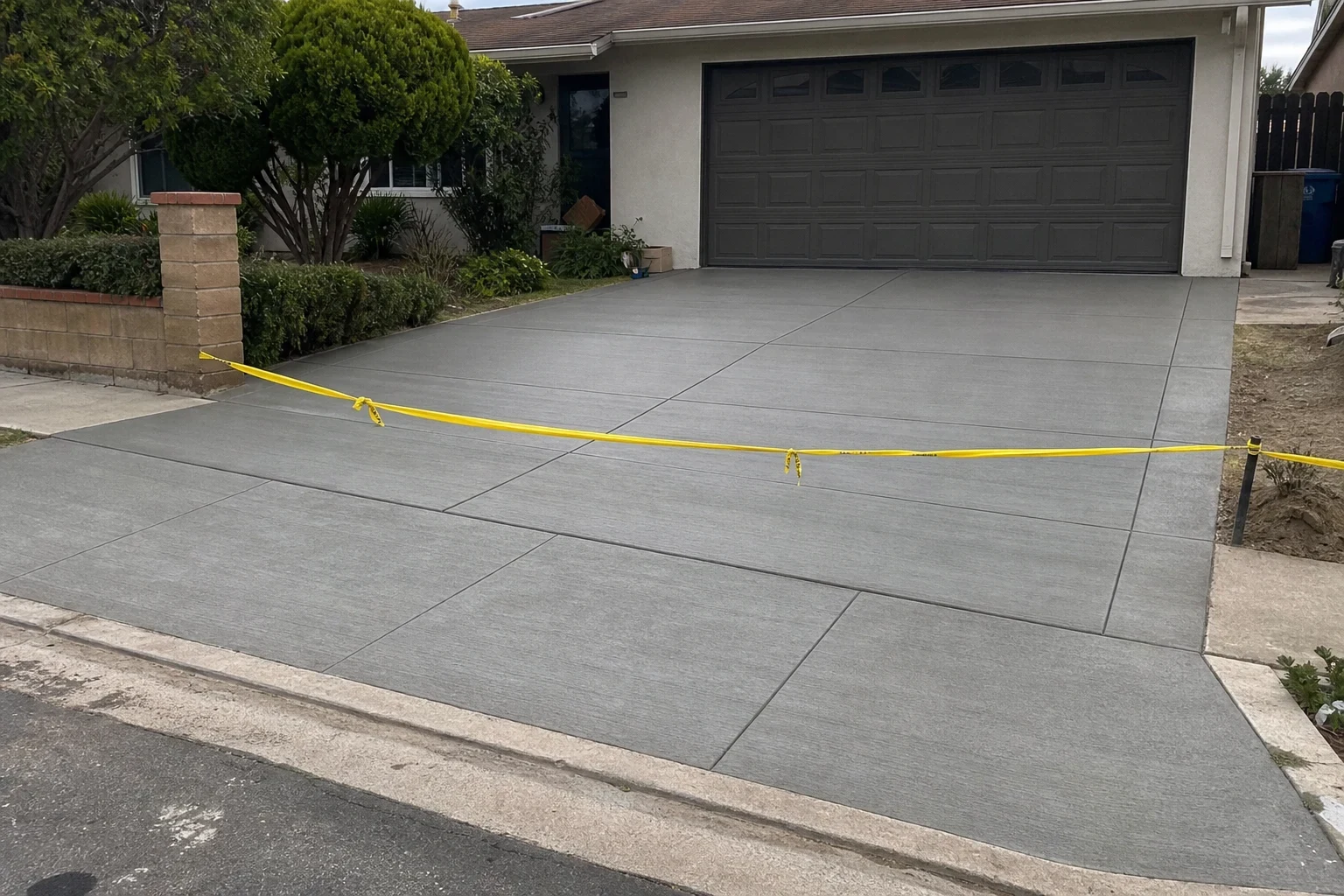
- Joints are cut or tooled at spacing matched to slab thickness, usually 8 to 10 feet on a 4-inch slab. Finish options include broom, exposed aggregate, salt finish or stamped concrete for sections you want patterned.
- Cleanup and cure instructions
- We wash down the site and leave written guidance on when to walk, when to set furniture and when to drive equipment across it.
Signs It Is Time to Plan a Concrete Backyard
Water pools against the house
If puddles sit along the foundation after rain, the yard is graded the wrong way. New concrete with correct slope and drains moves that water out to the street or a proper outlet.
The lawn costs more than it gives
Irrigation, mowing and patchy summer turf add up. Replacing part of the grass with concrete cuts water use and leaves less to maintain.
An old slab has heaved or sunk
Lifted edges and tilted sections usually mean the base or soil moved underneath. Removing it and pouring on a proper base is the lasting fix.
You only use one corner of the yard
When there is nowhere level to put a table or walk to the side gate, the yard goes unused. A planned layout opens up the space you already have.
A pool, spa or addition is coming
Concrete that will surround a future project should be planned around it now, so you are not cutting out new work in two years.
What Moves the Cost of a Concrete Backyard
Square footage sets the baseline, but much of the price is decided before any concrete is delivered. Every item gets its own line on our written estimate, so you can see what each part costs and decide what to build now and what can wait for a later phase.
Demolition and soil prep
Breaking out old concrete costs more than stripping lawn. Clay soil or soft fill may need over-excavation and extra base.
Access to the backyard
A narrow side yard can mean a line pump or wheelbarrows instead of a direct chute, which adds equipment and labor.
Drainage scope
A few area drains are simple. Long runs, deep lines or connections to several downspouts take more digging and pipe.
Finish choice
Broom finish is the most economical. Exposed aggregate, color and stamping add materials, labor and sealing.
Phasing
Splitting the yard into stages spreads the cost but adds a second mobilization. We plan joints so each phase meets the next cleanly.
How a Backyard Project Runs
- 1
Phone call and site visit
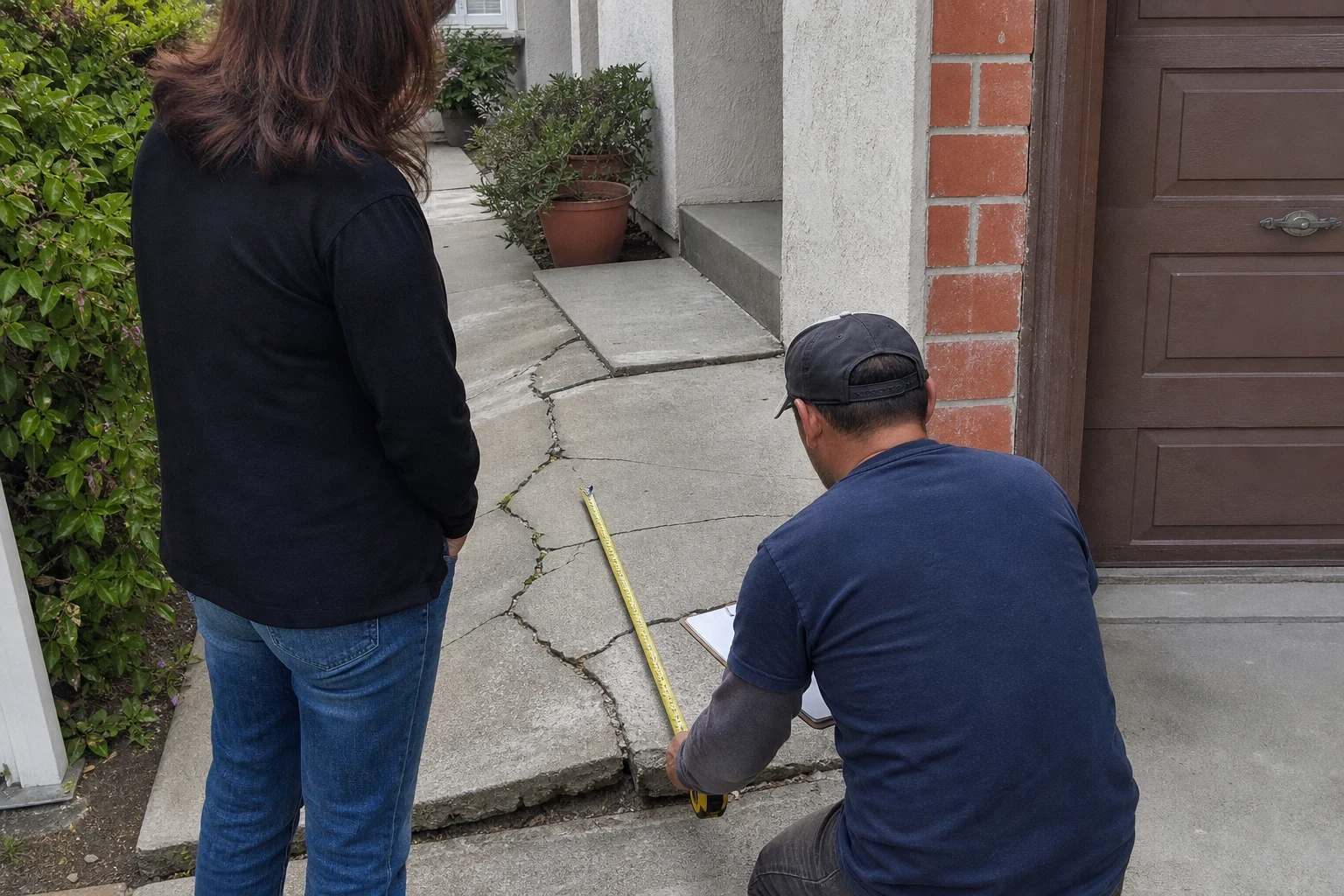
You tell us how you want to use the yard. We visit, measure, check access for the concrete truck or pump and look at how water drains today.
- 2
Written plan and estimate
You get a line-item estimate covering demolition, base, reinforcement, drains, finish and any phasing. We check whether the layout needs a city permit or HOA approval and note it in writing.
- 3
Excavation and forms
We dig to depth, compact the base, set forms and reinforcement, and install drain lines. You can walk the forms with us before the pour to confirm shapes and heights.
- 4
Pour and finish day
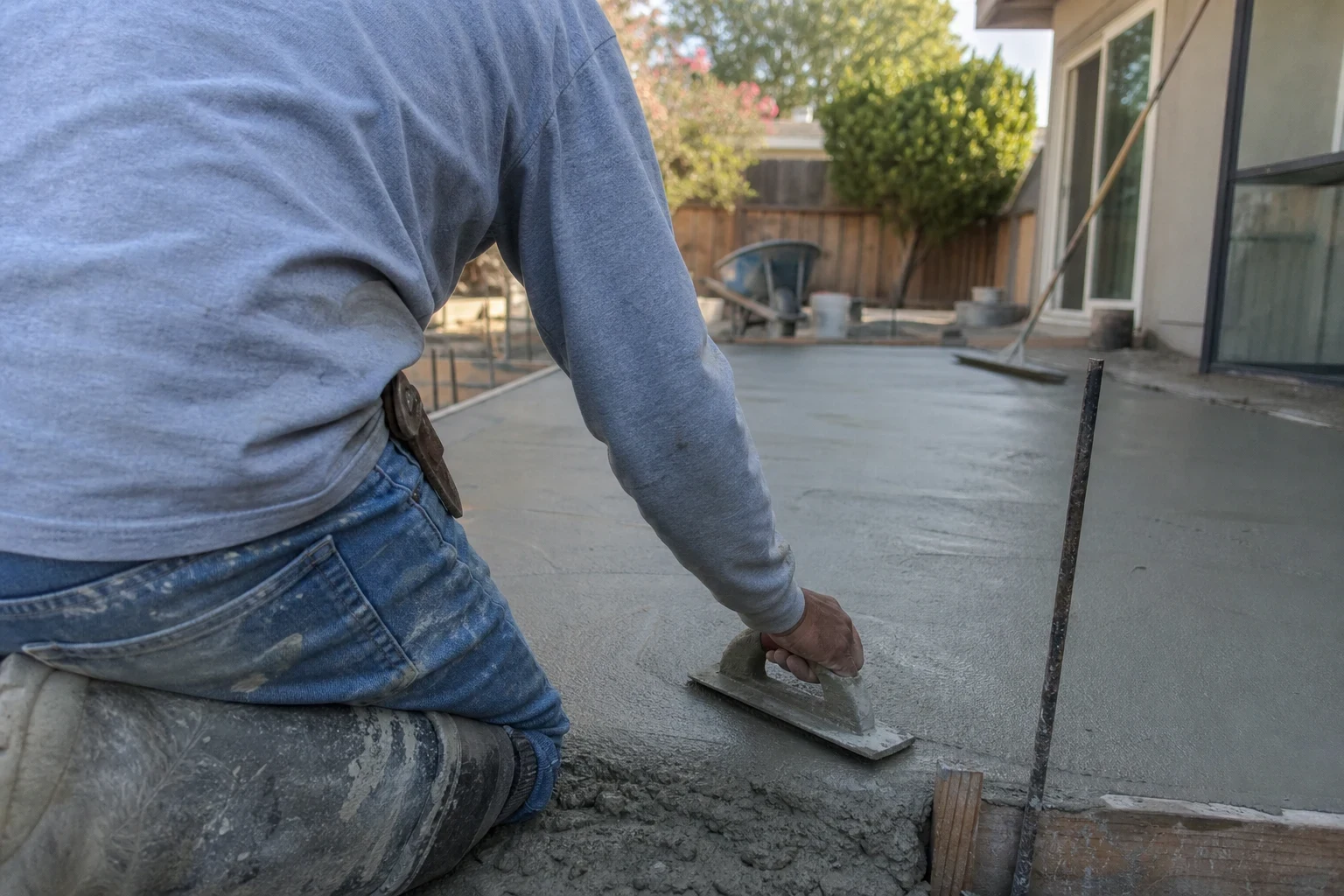
Concrete is placed, screeded, floated and finished in one session per section, with joints tooled or saw-cut within the first day. Pours are timed for the cooler part of the morning so the surface does not dry too fast.
- 5
Curing and handoff
Foot traffic is usually fine after 24 to 48 hours, furniture after about a week. Concrete reaches design strength around 28 days, which is when we recommend sealing decorative finishes.
Concrete Backyard Questions
Can we do the backyard in phases?
Yes, and it is one of the most common ways people budget a full yard. We set the overall grades and drain routes in the first phase so later sections tie in at the right height. Each phase gets its own line on the estimate.
Will the new concrete crack?
Concrete loses a little volume as the water in the mix leaves it, and that shrinkage almost always produces a few hairline cracks. We cut control joints at a spacing matched to the slab so those cracks form inside the joint lines, where they stay straight and hard to see. A compacted base and good drainage keep the slab from moving later.
Do I need a permit for backyard concrete?
Plain flatwork often does not, but drainage changes, steps, walls or work near property lines can. We check with the city for your layout and handle the permit when one is needed. If you live in an HOA, we can give you drawings for their review.
Who is doing the work, and is it covered afterward?
We are licensed by the California State License Board (CSLB), and our crew has been pouring concrete in this area for more than 15 years. A new backyard from us carries a 1-year warranty. The written estimate states that warranty in plain terms, so you have it on paper alongside the scope of the job.
How long until we can use the yard?
Most backyards take a few days of prep and one or two pour days depending on size. You can walk on it after a day or two and set patio furniture after about a week. Heavy items like a hot tub should wait closer to the full cure.
Start Planning Your Backyard
A short conversation gets the layout, drainage and phasing on paper so you can budget on your schedule. We also cover patios, walkways and side yards if your plan reaches past the back fence.