ServicesConcrete Slabs
Concrete Slabs in Mission Viejo
A new slab gives a shed, hot tub, generator or storage corner a level surface that holds up. We match thickness and steel to the weight it will carry, compact the base beneath it and slope the top so rain runs off instead of pooling.
A slab built for what sits on it
A slab looks simple, but the load decides almost everything about it. A garden shed needs a different slab than a filled hot tub or a backup generator. We start by asking what the slab will carry, then set the thickness, base depth, reinforcement and joint layout to match.
Much of south Orange County sits on expansive clay that swells when wet and shrinks as it dries. That movement is what lifts and cracks thin slabs poured on loose fill. We excavate to firm soil, compact a crushed aggregate base and tie in steel so the slab moves as one piece instead of breaking apart.
The best time to plan a slab is before the shed is delivered or the spa is ordered. Calling early gives you time to confirm the footprint, check any city permit needs and fit the pour into your budget without rushing.
What a slab job includes
Layout and load check
We stake out the footprint at your home and confirm how much the shed, spa or equipment weighs. Spa makers list filled weights and pad specs, and we pour to those numbers.
Excavation and base
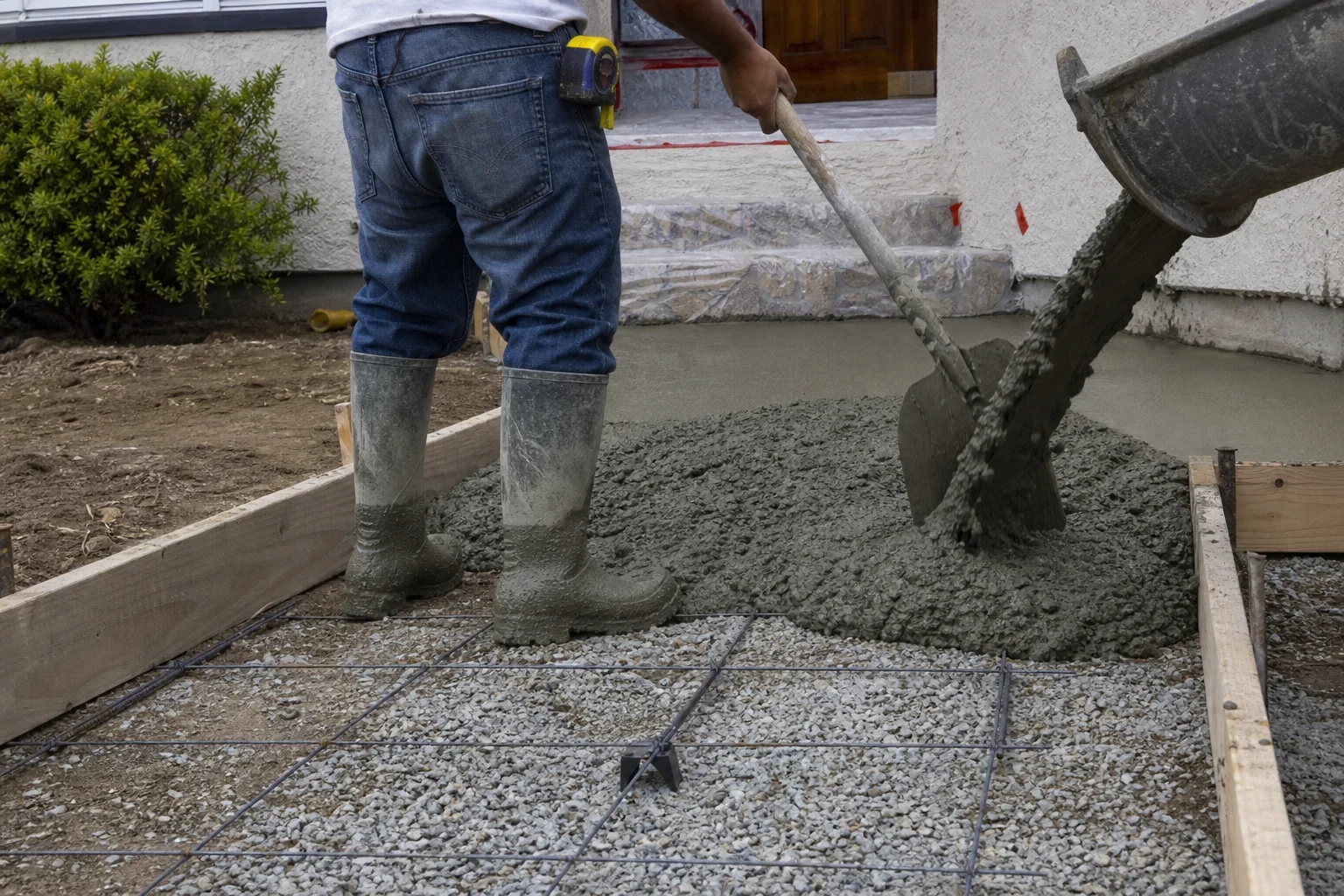
Sod, roots and soft soil come out first. Then we spread and compact crushed aggregate, usually around four inches deep, so no corner of the slab sinks lower than the rest.
Forms and reinforcement
Wood forms fix the edges and the finished height. Rebar rests on plastic chairs so it ends up near mid-depth of the pour, where it resists bending; steel left lying on the soil does very little.
Pour, finish and joints
We place the mix, screed it level, float it and apply a broom or smooth surface. Control joints are cut on a set grid so shrinkage cracks run straight along lines we picked.
Drainage slope
Each outdoor slab is pitched slightly, roughly an eighth to a quarter inch per foot, away from your home so water sheds off rather than collecting near the foundation.
Cleanup
After the concrete sets we strip the forms and haul off the dug-out soil and leftover debris.
When a new slab makes sense
- A shed or spa is on order
- Pavers and gravel shift under concentrated weight. A poured slab gives a shed floor or hot tub a level, stable surface from day one.
- Equipment sits on bare dirt
- AC condensers, pool pumps and generators sink and tilt on soil, which strains lines and connections. A small reinforced pad holds them level.
- An old slab has heaved or broken up
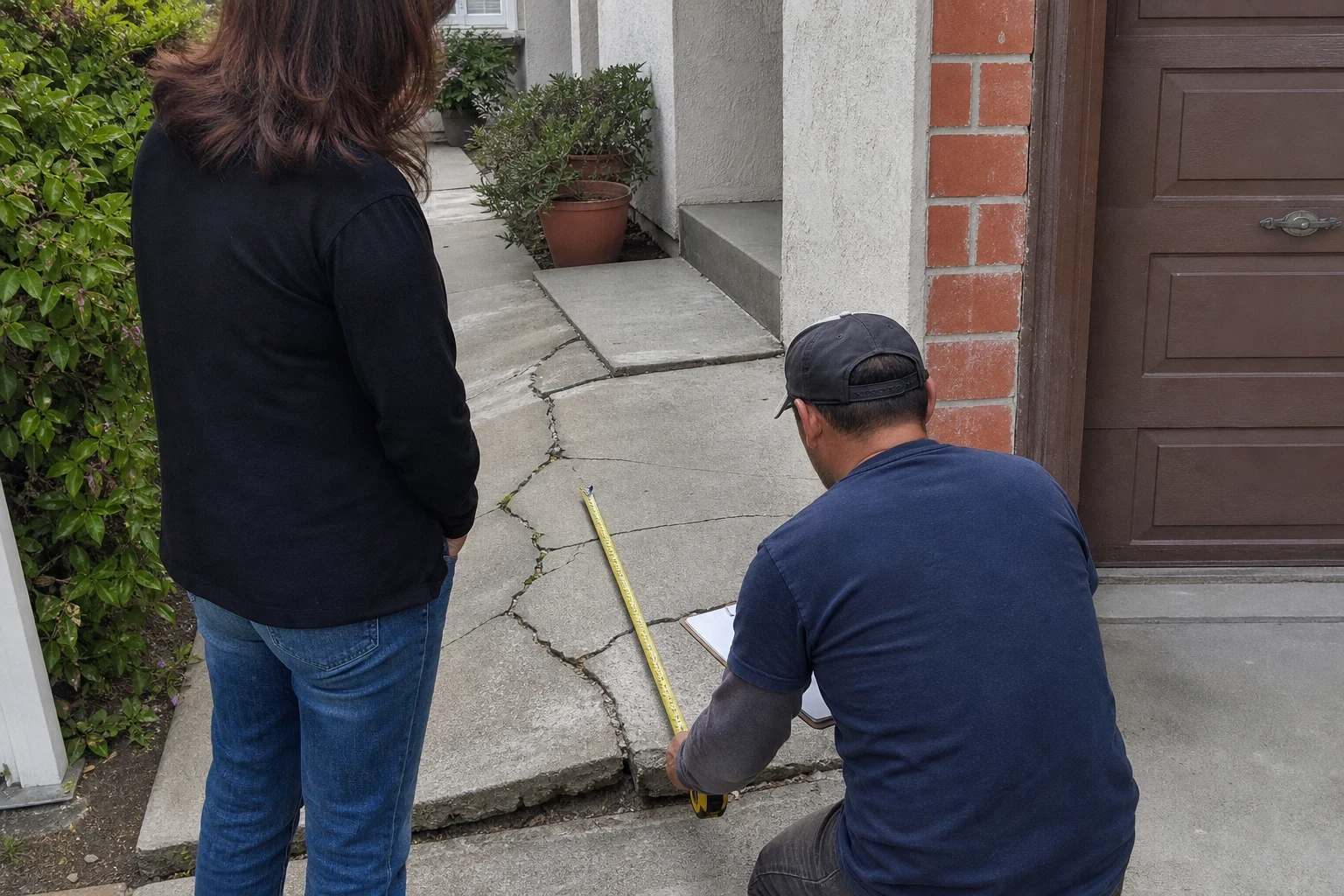
- When a slab has lifted, split into pieces or tipped toward the house, pouring a new one on a proper base is often the sound choice. We remove the old concrete and start over rather than patching it.
- You need flat storage space
- Trash bins, firewood, a kayak rack or a work area all do better on clean concrete than on mud that washes out every winter.
- Water collects near the house
- A low, flat patch of ground beside your home can hold runoff. A sloped slab moves that water away.
How the work runs
- 1
First phone call
Let us know what the slab will support, about how big it should be and where it will sit. We ask about access and ground conditions, then book a site visit.
- 2
Site visit and estimate
We take measurements, look at the soil and grade, and flag any City of Mission Viejo permit question. You receive an itemized written estimate showing excavation, base, steel, concrete and any permit as separate lines.
- 3
Forming and steel
Digging, base compaction, forms and rebar come before the pour. You can check the outline and finished height while it is still easy to adjust.
- 4
Pour day
A truck or pump brings the mix, and we place, finish and cut joints in a single session. Walking on it lightly is usually fine after a day or two.
- 5
Curing
Concrete reaches most of its design strength over about 28 days. We let you know when it can take a shed delivery, a filled spa or heavy equipment.
What moves the price of a slab
Three things drive slab cost: the volume of concrete, the ground it sits on and how far the mix has to travel from the truck. Each one gets its own line on our estimate, which makes it easier to budget now and decide what fits this year.
- Footprint and depth
- A six-inch spa slab needs roughly half again as much concrete as a four-inch shed pad of the same size. We set depth by the weight, not by habit.
- Ground conditions
- Clay or loose fill that has to be dug deeper means more excavation, more soil hauled off and more base rock brought in.
- Reaching the forms
- When a truck chute cannot get close, concrete goes in by pump or wheelbarrow. Both add equipment time or labor.
- Taking out an old slab
- Breaking up existing concrete and trucking it away is priced on its own line, separate from the new pour.
- Permit and surface
- Certain slabs require a city permit. A broom finish is the most economical surface; a hard-troweled or decorative top adds finishing time.
Concrete slab questions
- How thick should my slab be?
- Sheds, trash bins and light storage are usually fine on four inches. A hot tub, generator or other heavy load typically needs five to six inches and a tighter steel grid. We check the manufacturer's pad requirements before the forms go up.
- Will my slab crack?
- As the water in fresh concrete evaporates, the slab shrinks slightly, and that shrinkage usually shows up as a few thin surface lines. The control joints we cut tell those lines where to go, so they follow a straight grid instead of wandering across the surface. Underneath, the compacted base and rebar keep each section at the same height as its neighbor.
- Do I need a permit?
- That depends on the slab's size and what it will support. We look into it with the city while preparing your estimate, and if a permit is required we pull it and include it in the price up front.
- Who will be pouring it?
- Our company is licensed by the California State License Board (CSLB) and has been in business 15+ years. We pour slabs in Mission Viejo and surrounding towns like Lake Forest and Rancho Santa Margarita.
- Is the work covered after the pour?
- Yes. Slabs we pour carry a 1-year warranty. Ask about it at the estimate visit and we will explain which issues it applies to before you commit.
Plan your slab before the delivery date
Give us the size and the load, and we will walk you through base, thickness and timing so the pour fits your schedule and budget.